Facts About Washington D.C. During The Civil War

Washington D.C. In The Civil War

Washington D.C. – the Capital of the United States

Washington D.C. went through many changes during the Civil War.

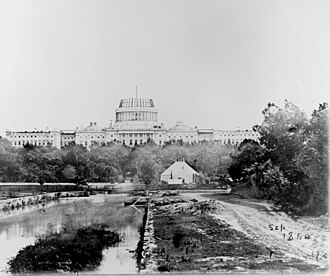
    Capitol Under Construction in Washington D.C. 1860.

  • Washington D.C. underwent a dramatic transformation during the Civil War, evolving from a relatively small, underdeveloped city into a bustling, heavily fortified Union capital.
  • Washington D.C. served as the official capital of the Union throughout the entire Civil War.
  • Washington D.C. was strategically and precariously located, sandwiched between Confederate Virginia and the border slave state of Maryland. It was highly vulnerable to attack by Rebel forces.
  • The population of Washington D.C. exploded during the Civil War. It increased from approximately 75,080 at the start of the war to an estimated 200,000 at its peak. There was an influx of soldiers, government workers, refugees, and formerly enslaved people who came to Washington D.C.
  • At the Civil War’s outset, Washington D.C. was largely undefended and vulnerable. There was only one old fort (Fort Washington) that was located 12 miles south of the city.
  • Following the First Battle of Bull Run/First Manassas, a massive fortification effort began in Washington D.C. resulting in a ring of defenses around the city.
  • By 1865, Washington D.C. was one of the most heavily fortified cities in the world. It had 68 enclosed forts, 93 detached batteries, 20 miles of rifle pits, and 32 miles of military roads.
  • The formidable Civil War defenses of Washington D.C. largely deterred direct Confederate assaults on the capital, though feints and indirect threats were common.
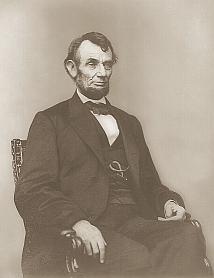
  • President Abraham Lincoln

    President Abraham Lincoln

  • President Abraham Lincoln famously observed the fighting at Fort Stevens on July 12, 1864,when Confederate Lt. Gen. Jubal Early’s forces assaulted the fort. This made him the only United States president to come under direct enemy fire while in office. At Fort Stevens, Lincoln was fired at by sharpshooters which prompted a Union officer to shout, “Get down, you damn fool!“.
  • The rapid population growth of Washington D.C. during the Civil War strained the city’s infrastructure and resources. The city was troubled with poor sanitation, muddy streets, and outbreaks of diseases like smallpox.
  • In Washington D.C. during the Civil War, many buildings, including the Patent Office and public halls, were converted into hospitals to care for the thousands of wounded Union soldiers arriving from the front lines.
  • Slavery was abolished in Washington D.C. in April 1862, it the first emancipated city and a magnet for formerly enslaved people.
  • “Freedom villages” and “contraband camps” sprang up around Washington D.C. to accommodate the thousands of formerly enslaved people seeking refuge and freedom.
  • During the Civil War in Washington D.C. many formerly enslaved people found employment and contributed to the war effort. They helped to construct the city’s defenses.
  • Beyond the military front, Washington D.C. was a major political battleground. There were intense debates over emancipation and the future of the nation.
  • In Washington D.C., the Civil War spurred advancements in medicine and technology. Thaddeus Lowe used balloons for reconnaissance with support from the Smithsonian Institution.
  • During the Civil War in Washington D.C. President Abraham Lincoln was a constant presence. He often visited hospitals, and oversaw military operations as he grappled with the severe challenges of the Civil War.
  • The infamous assassination of President Lincoln by cowardly actor John Wilkes Booth occurred at Ford’s Theatre in Washington, D.C. in April 1865.
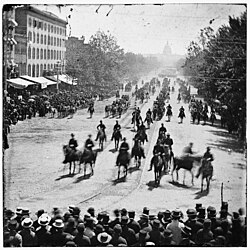
  • Grand Review in Washington D.C.

  • The Civil War officially ended with the Grand Review of the Armies in May 1865 when a massive parade of Union troops proceded through the streets of Washington, D.C.
  • The Civil War fundamentally transformed Washington D.C., laying the groundwork for its development into a major metropolitan center. There was enormous post-Civil War growth.
  • During and after the Civil War, Washington, D.C.’s character shifted from its Southern origins to a more Northern influence, reflecting the influx of Union supporters and freed-people.
Free And Slave States Map – State, Territory, And City Populations

Which states were free and which states had slavery?

How many slaves were there? How many black people were free? Which states did they live in?

How were the states and cities populated when the Civil War began?

Sometimes when learning about the Civil War it’s good to know the geography of the free and slave states, and how the free and slave states were populated. Provided here for reference is a map that shows the free and slave states, listings of the free, slave, and border states, tables of state and territory populations, a table of the total populations of the states and territories, and a table of the 10 largest cities in the United States in 1860.

In the times before and during the Civil War much of the United States was made up of farmland, unsettled territories, and lightly populated areas. Most people lived on farms or in small towns, but in contrast, there were cities like New York, Philadelphia, Boston, and New Orleans which were bustling with people, business, factories, and activity. The South had fewer people than the North, and the North had more enterprise than the South. The South was more rural with farms and plantations, and while the North had its farmers and rural places too, it had more cities. The division of slavery, the “peculiar institution,” would split the union of the states and bring on a Civil War that would end the lives of hundreds of thousands. A Civil War that would forever change the lives of the people and the landscape of the North and the South.

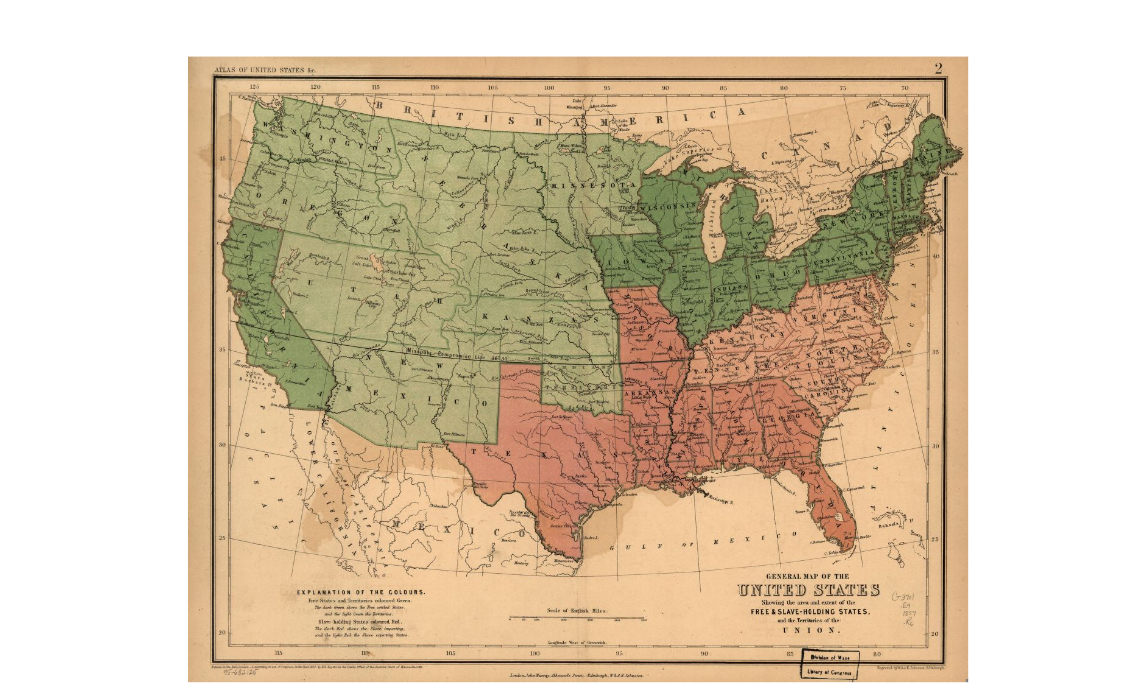
1857 General Map Of The United States Showing Free States, Slave States, And Territories

Click/right click on map for larger image.

1857 General Map of the United-States

1857 General Map of the United-States

Map Color Key

  • Free states and territories colored green.
  • Dark green shows the free states.
  • Light green shows the territories.
  • Slave-holding states colored red.
  • Slave importing states colored dark red.
  • Slave exporting states colored light red.
  • Boundary of the seceding states colored light gray.

Free States 1857

  • California
  • Connecticit
  • Illinois
  • Indiana
  • Iowa
  • Maine
  • Massachusetts
  • Michigan
  • New Hampshire
  • New York
  • New Jersey
  • Ohio
  • Pennsylvania
  • Rhode Island
  • Vermont
  • Wisconsin

Slave States 1857

  • Alabama
  • Arkansas
  • Delaware
  • Florida
  • Georgia
  • Kentucky
  • Louisiana
  • Maryland
  • Mississippi
  • Missouri
  • North Carolina
  • South Carolina
  • Tennessee
  • Texas
  • Virginia

Learn Civil War History Podcast Episode Seven: Freedman Jourdon Anderson Writes A Letter To His Old Master

Spotify

Civil War Free States 1861-1865

  • California
  • Connecticut
  • Illinois
  • Indiana
  • Iowa
  • Kansas
  • Maine
  • Massachusetts
  • Michigan
  • Minnesota
  • Nevada
  • New Hampshire
  • New Jersey
  • New York
  • Ohio
  • Oregon
  • Pennsylvania
  • Rhode Island
  • Vermont
  • West Virginia (Became a state in 1863.)
  • Wisconsin

Civil War Slave States 1861-1865

  • Alabama
  • Arkansas
  • Florida
  • Georgia
  • Louisiana
  • Mississippi
  • North Carolina
  • South Carolina
  • Tennessee
  • Texas
  • Virginia

Does reading about Civil War history from long and dry academic-like books bog you down and cause you to lose interest? Would you like to read interesting stories based on facts of the Civil War, stories that inform you and move along with the war’s history? Does having to read from cover to cover tire you and cause you to drag through a history book? Would you prefer the freedom to skip around in a book and learn story-by-story about the Civil War? If you answered “yes” to any of these questions, then the factual stories in 125 Civil War Stories and Facts will help you learn Civil War history. The stories are informative and entertaining and it’s a fun way to learn about the Civil War. Do books like Civil War Trivia and Fact Book by Webb Garrison or The Civil War: Strange & Fascinating Facts by Burke Davis interest you? Then you will find 125 Civil War Stories and Facts follows in their tradition of providing the reader with rich and interesting information about the Civil War. Available as a Kindle device e-book or as a paperback. Get 125 Civil War Stories and Facts now!


Civil War Border States

These are salve states that remained in the Union.

  • Delaware
  • Kentucky
  • Maryland
  • Missouri

United States Territories 1861

  • Washington Territory
  • Dakota Territory
  • Nebraska Territory
  • Colorado Territory
  • Utah Territory
  • Nevada Territory (Became a state in 1864.)
  • New Mexico Territory
  • Indian Territory

State Populations From 1860 Census

[table id=1-1860-State-Population /]

Notes:
(a) – does not include 294,500 Indians who kept their tribal character
(b) – 34,933 Asians included
(c) – Indentured servants
Data source: The Library of Congress Civil War Desk Reference


Territory Populations From 1860 Census

[table id=2 /]

Notes:
(a) – does not include 294,500 Indians who kept their tribal character
(b) – Populations included: Georgetown (8,733), Washington City (61,122), rest of the District (5,225).
Data source: The Library of Congress Civil War Desk Reference


Population Totals States And Territories Combined

[table id=3 /]

Notes:
(a) – does not include 294,500 Indians who kept their tribal character
Data source: The Library of Congress Civil War Desk Reference


The 10 Largest Cities Of The United States In 1860

[table id=4 /]

Notes:
Data source: The Library of Congress Civil War Desk Reference


Learn Civil War History Podcasts

[wp-rss-aggregator]


My book 501 Civil War Quotes and Notes features quotes made before, during, and after the Civil War. Each quote has an informative note to explain the circumstances and background of the quote. Learn Civil War history from the spoken words and writings of the military commanders, political leaders, the Billy Yanks and Johnny Rebs who fought in the battles, the abolitionists who strove for the freedom of the slaves, the descriptions of battles, and the citizens who suffered at home. Their voices tell us the who, what, where, when, and why of the Civil War. Available as a Kindle device e-book or as a paperback. Get 501 Civil War Quotes and Notes now!

Related Posts: