November 8, 1864
On this day in 1864, Abraham Lincoln was elected to his second term as president of the United States.
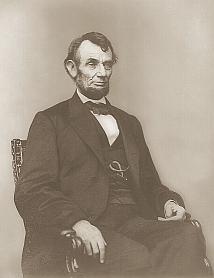
President Abraham Lincoln
“If the rebellion could force us to forego, or postpone a national election, it might fairly claim to have already conquered and ruined us.”
The Confederate Army had recently advanced so close to Washington, D.C., that by standing on top of a parapet with field glasses, Lincoln was able to watch a battle. On July 30, 4,000 Union soldiers were killed in a disastrous attempt to invade Petersburg, Virginia.
The army needed 500,000 more soldiers, Lincoln would probably have to call for another draft and the war debt was becoming unsustainable. On August 23, Lincoln wrote a memo to his cabinet saying:
“This morning, and for some days past, it seems exceedingly probable that this Administration will not be re-elected.”
As the presidential election day drew near, President Lincoln’s hopes for a second term were fading.
The Democrat Party had as its candidate former Union general George B. McClellan and its platform was based on ending the war. This policy turned out to be a huge mistake when news arrived early September that the Union Army had captured Atlanta and Mobile. The Union forces were now starting to win battles and the war. Suddenly, the Democrats looked like the party of surrender and this made all the difference in the election.
Abraham Lincoln won the election with 2,330,552 votes to challenger George B. McClellan’s 1,835,985 votes. Lincoln had 212 Electoral College votes to McClellan’s 21 votes. Lincoln carried every state except New Jersey, Delaware, and Kentucky.
