“There is nothing like it on this side of the infernal region. The peculiar corkscrew sensation that it sends down your backbone under these circumstances can never be told. You have to feel it.”
Just about everyone thinks he or she knows what the Rebel Yell sounded like. Movies and television have provided us their versions, but no one knows for sure what this battle cry sounded like. Or … do we know today exactly how the actual Rebel Yell sounded?
Rebel Yell First Heard At First Bull Run
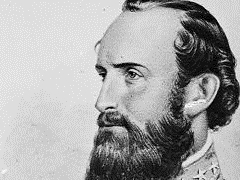
Thomas Jonathan “Stonewall” Jackson
The Rebel Yell was first heard at The Battle of First Bull Run (First Manassas) on July 21, 1861. At an important part of the fight and as Confederate forces were failing, Rebel reinforcements arrived on the battlefield. Thomas Jonathan Jackson gave the order: “Charge, men and yell like furies!” The Confederates were able to rally, presumably while yelling like furies, and the Rebel Yell was born.
Savvy readers will know that not long before this, Jackson had gained his nickname of “Stonewall” from General Barnard Bee. As Jackson gave the above order that resulted in the Rebel Yell, he was not yet called Stonewall Jackson. After all, the battle was still being fought!
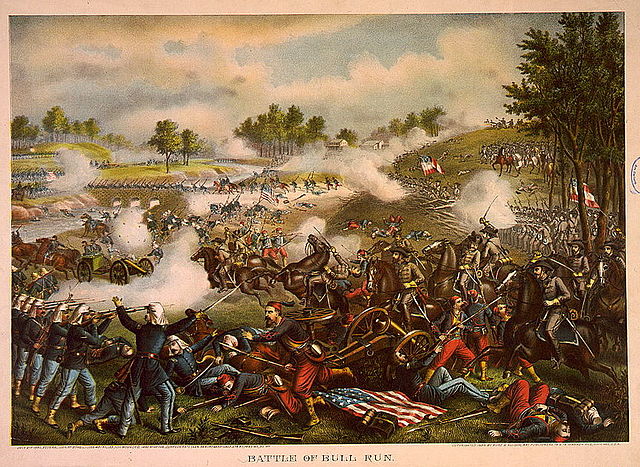
First Battle of Bull Run by Kurz & Allison
Confederate Lieutenant Richard Lewis, Fourth South Carolina Volunteers, wrote the following words describing the action at First Bull Run in a letter dated July 24, 1861 (bold added by your BlogMaster):
“The Yankees in such superiority of numbers … poured forth such a destructive fire into our ranks that our men were becoming confused and began to fall back. The gallant and noble General Barnard Bee dismounted his horse to rally the men, telling them as Carolinians they should never disgrace or dishonor their banner but should die under its folds, and all rallied again, and, with a shout and a yell that might have been heard for miles, they charged and repulsed the enemy, and drove them back from their position. It was not long before our brave General Bee fell mortally wounded.”
You Have To Feel The Rebel Yell
The Rebel Yell has been described as a high-pitched shout, and is possibly an adaptation of a Southern fox hunter cry. For the enemy Yankees, hearing the Rebel Yell most likely sent a chill of fear up their spines. Indeed, after the war, a veteran Yankee described the Rebel Yell:
“There is nothing like it on this side of the infernal region. The peculiar corkscrew sensation that it sends down your backbone under these circumstances can never be told. You have to feel it.”
There is no record that any Yankees actually ran after hearing the Rebel Yell.
Has The Rebel Yell Been Lost To History?
Those who fought in the Civil War have long ago left us, they can no longer give the Rebel Yell or tell us what it sounded like. But, as veterans they provided us with what the Rebel Yell sounded like by film and audio.
Bringing The Rebel Yell To Life
Real Rebel Yell
Credit: History Publishing Company, Palisades, New York.
Rare Footage of Civil War Veterans Doing the Rebel Yell
Library of Congress/Smithsonian Magazine
Gettysburg 75th Anniversary Reunion
Rebel Yell By Veterans
Rebel Yell occurs at approximately 2:40.
