President Andrew Johnson’s Proclamation Declares The Civil War Has Ended
August 20, 1866
On August 20, 1866, President Andrew Johnson gave a proclamation declaring the Civil War was now officially over.
“[…] peace, order, tranquility and civil authority now exist in and throughout the whole United States of America.” –President Andrew Johnson
President Andrew Johnson’s Words On April 2, 1866
Earlier, with these words on April 2, 1866, President Johnson proclaimed that the insurrection was over:
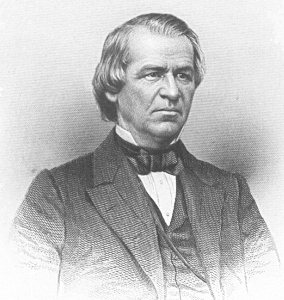
Andrew Johnson
“Now, therefore, I, Andrew Johnson, President of the United States, do hereby proclaim and declare that the insurrection which heretofore existed in the States of Georgia, South Carolina, Virginia, North Carolina, Tennessee, Alabama, Louisiana, Arkansas, Mississippi, and Florida is at an end and is henceforth to be so regarded.”
Notice that Texas is not included in Johnson’s list of states where the “insurrection” had come to an end. Texas had not yet formed a new state government, and so it could not officially be said that its insurrection had ended. Texas was the twenty-eighth state to join the United States when it became a state in 1845. Texas seceded from the United States in early 1861, becoming part of the Confederate States of America. To once again become a state in the United States, Texas had to replace its Confederate-based state government.
President Andrew Johnson’s End Of The Civil War Proclamation
After Texas had established a new state government, President Johnson followed his words of April 2, with a proclamation on August 20, 1866, finally declaring the insurrection to have ended:
“I do further proclaim that the said insurrection is at an end and that peace, order, tranquility, and civil authority now exist in and throughout the whole United States of America.”
With these words of President Johnson, the Civil War was now officially decreed to be over.
Reconstruction was underway as the nation worked to rebuild all that had been destroyed in the Civil War. Healing the wounds of the nation from the Civil War continues on today. As a united country with a bloody and awful Civil War in our past, we are still striving for: “peace, order, tranquility, and civil authority” to spread completely “throughout the whole United States of America.”
Related posts:
Palmito Ranch – The Last Significant Land Battle Of The Civil War